
Introduction
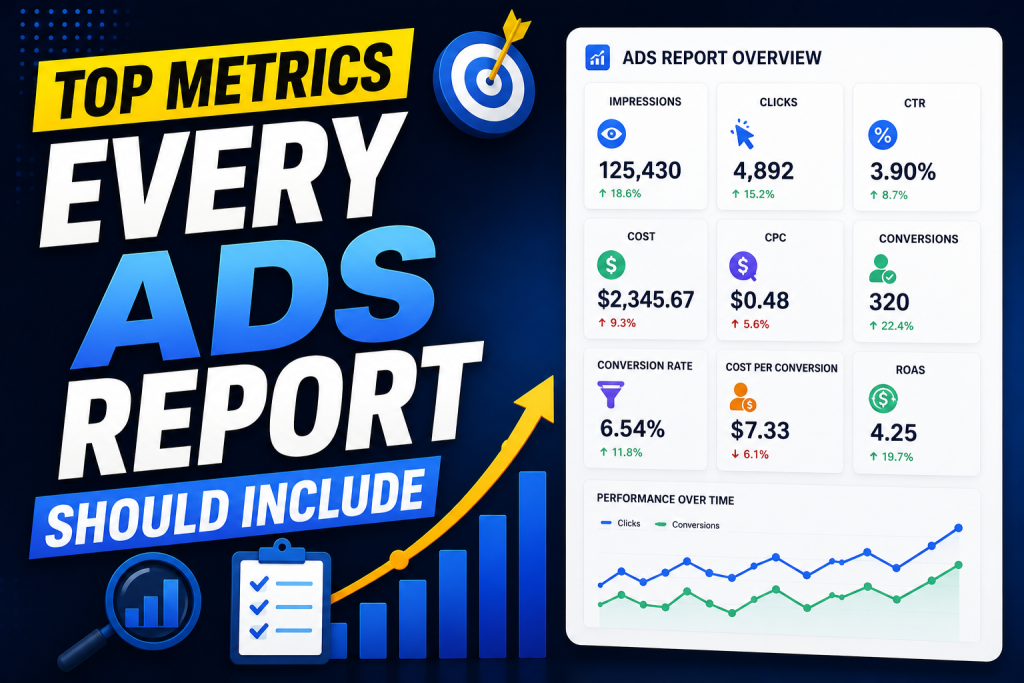
In the fast-paced world of digital advertising, knowing how to analyze your campaigns effectively can make all the difference between success and stagnation. Whether you run a small business or manage multi-million dollar ad budgets, crafting a comprehensive ads report is essential for understanding the value of your efforts. Below are the top metrics every ads report should include, ensuring that you not only evaluate performance but also motivate your team to strive for continual improvement.
1. Click-Through Rate (CTR)
The Click-Through Rate is one of the most crucial metrics to monitor. It tells you the percentage of people who clicked on your ad after seeing it. A higher CTR indicates effective ad design and relevance to your audience. Tracking this will help you refine your ad copy and target more effectively, ultimately driving better campaign results.
2. Conversion Rate
While getting clicks is critical, converting those clicks into sales or leads is what really drives success. The conversion rate measures the percentage of visitors who take a desired action after clicking your ad. Keep an eye on this metric to understand how well your landing pages and calls to action are performing. If your CTR is healthy but conversion rates are low, it may be time to reassess your landing page strategy.
3. Return on Ad Spend (ROAS)
ROAS is the ultimate metric to gauge the financial effectiveness of your advertising campaigns. It measures the revenue generated for every dollar spent on ads. A strong ROAS indicates that your ads are not only reaching your target audience but also driving significant sales, making this metric a vital part of your report. Aim for a positive ROAS to ensure you’re investing your advertising budget wisely.
4. Cost Per Acquisition (CPA)
Understanding how much it costs to acquire a customer is essential for budget management. CPA shows you how much you are spending to convert a lead into a paying customer. Monitoring this metric helps to identify how efficient your ad spend is and whether you need to adjust targeting, bidding strategies, or ad creatives to lower your CPA.
5. Impressions and Reach
Tracking impressions (the total number of times your ad is shown) and reach (the number of unique users who see your ad) provides invaluable context. These metrics help you understand the scale of your ad’s visibility and whether you’re effectively reaching your target audience. A balance between impressions and engagement is key; too many impressions with low engagement can indicate ad fatigue or mismatch with your audience.
6. Engagement Metrics
Beyond clicks, understanding how users interact with your ads is crucial. Metrics such as likes, shares, comments, and video views can tell you how well your content resonates with your audience. Engaging ads often lead to increased brand awareness and customer loyalty, so keep these metrics front and center in your reports.
7. Quality Score (for PPC Ads)
If you’re running pay-per-click (PPC) campaigns, your Quality Score is an important metric to monitor. It measures the relevance of your keywords, ads, and landing page quality. A high Quality Score leads to lower costs and better ad placements. Regularly reviewing this metric will allow you to optimize your campaigns for better performance.
Conclusion
Every ads report you create should be a powerful tool that not only evaluates current performance but also drives future success. By keeping these key metrics front and center, you can motivate your team and make informed decisions that propel your campaigns forward. In a world where digital advertising continues to evolve, staying grounded in the right metrics will not only help you understand where you’ve been but also guide you toward where you need to go. Remember, the only way to achieve great results is through continuous learning and adaptation. Embrace these metrics, and let them empower your advertising journey!